LHC recognises daily-wage employees as permanent workers in Punjab health authorities
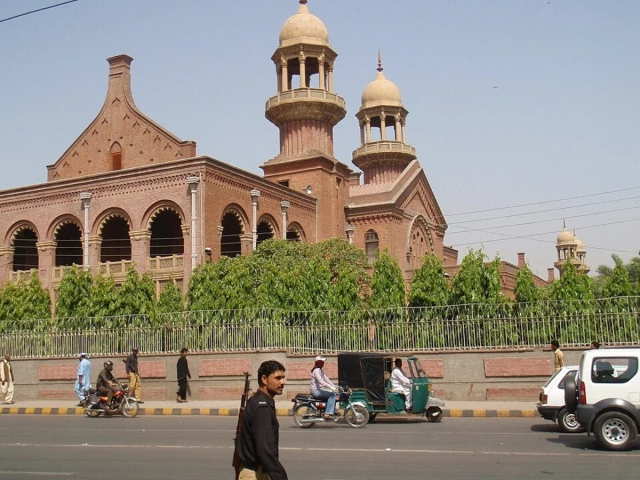
“The Lahore High Court (LHC) has ruled that daily-wage and work-charged employees serving against posts of a permanent nature in Punjab's District Health Authorities (DHAs) acquire the status of perman…”
Allowing a batch of constitutional petitions, Justice Khalid Ishaq held that the Punjab government's 2021 policy governing daily-wage, work-charged and contingent-paid employees was applicable to DHAs and could not be avoided on the grounds that the authorities were autonomous bodies.
In a detailedjudgmentin Muhammad Bilal Raza and others vs Government of Punjab and others (2026 LHC 8384), the court declared the government's refusal to grant eligible employees permanent status unlawful and set aside the orders through which the authorities had rejected their requests.
The petitioners, including data entry operators, sanitary workers and a laboratory assistant, were employed at various public health facilities across Punjab. Most had initially been appointed for 89 days, with their contracts repeatedly extended over several years despite the continuing nature of their work.
"Stay connected with Aman-e-Pakistan for ongoing live reporting and verified investigative updates."
The judgment noted that some employees had been working since 2016 and 2017, while others had served for shorter periods. Several approached the High Court after their requests for recognition as permanent employees were rejected.
Some also complained that their services had been discontinued through verbal orders, while similarly placed employees in other districts had already been granted permanent-workman status. Read:SC strengthens labour rights, requires written reasons for dismissals.
The government departments and DHAs opposed the petitions, arguing that the authorities were autonomous bodies and therefore not covered by the 2021 policy issued by the Services and General Administration Department (S&GAD). Some also maintained that the petitioners did not qualify as skilled workers and cited financial constraints.
Rejecting the autonomy argument, the court referred to Rule 10(c) of the Punjab District Health Authorities (Conduct of Business) Rules, 2016, which requires a DHA's chief executive officer to implement standards and policies prescribed by the government.
The judge held that there was no plausible justification for the DHAs to refuse to implement the 2021 policy, adding that its provisions applied to their daily-wage and contingent-paid employees. The judgment also distinguished between regularisation as a civil servant and recognition as a permanent workman under labour laws.
Referring to the Industrial and Commercial Employment (Standing Orders)Ordinance, 1968, the court noted that a permanent workman was defined as an employee, skilled or unskilled, engaged in work of a permanent nature likely to last more than nine months, who had satisfactorily completed a three-month probationary period.
The court relied on the Supreme Court's ruling in Province of Punjab vs Ahmad Hussain (2013 SCMR 1547), which recognised that daily-wage and work-charged employees continuously performing work of a permanent nature beyond nine months could acquire the status of permanent workmen.
It observed that the nature of the work, rather than the employee's designation or temporary mode of appointment, was decisive in determining their legal status. Read more:Labour rights! The judge further held that the provisions of the 2021 policy were "self-executory", meaning eligible employees acquired permanent-workman status by operation of law without requiring a separate notification from the authorities.
The court also rejected the argument that employees who had been laid off or whose short-term appointments had not been extended could no longer claim protection under the policy.
Citing the Supreme Court's judgment in Town Administration and another vs Mohammad Khalid and others (2024 SCMR 1852), the High Court observed that repeatedly engaging employees through short-term or daily-wage arrangements could not be used as a device to circumvent protections available under labour laws.
The court further noted that the Standing Orders required employers to provide employment conditions in writing and communicate termination, removal, retrenchment, discharge or dismissal through a written order explicitly stating the reasons.
Citing a Supreme Court verdict on workers' rights, the judgment stated, "Verbal termination of service is alien to labour and service laws and is also contrary to the principles of natural justice, good governance, fairness and transparency. "It also addressed the petitioners' allegations of discriminatory treatment.
Also read:NA resolution on workplace harassment. The employees had produced departmental orders showing that similarly placed daily-wage workers had already been granted permanent-workman status in various districts. Invoking Article 25 of the Constitution, which guarantees equality before the law, the court observed that the authorities had failed to establish any reasonable distinction between those employees and the petitioners.
It held that granting benefits to some employees while denying them to others in similar circumstances was not legally sustainable. On outstanding salaries, however, the court did not directly order the payment of all dues claimed by the petitioners.
"The question of disbursement of outstanding remuneration/salaries of the Petitioner(s) shall be decided through separate order(s) by the Respondents/Authorities after affording a meaningful opportunity of hearing to the Petitioner(s) on the basis of the available record," the judgment stated.
It directed that where it was established that an employee had continued performing duties during the disputed period, the outstanding remuneration would have to be paid. However, in cases where no services had been rendered, the authorities could apply the principle of "no work, no pay".
The ruling reinforces the legal protections available to long-serving daily-wage and work-charged employees in Punjab's public health system, requiring the concerned authorities to implement the government's policy in accordance with labour laws.
Continue Reading: More in National
Swipe or click arrows to explore National desk coverage