Punjab opposition leader petitions LHC against amendments in anti-terrorism law
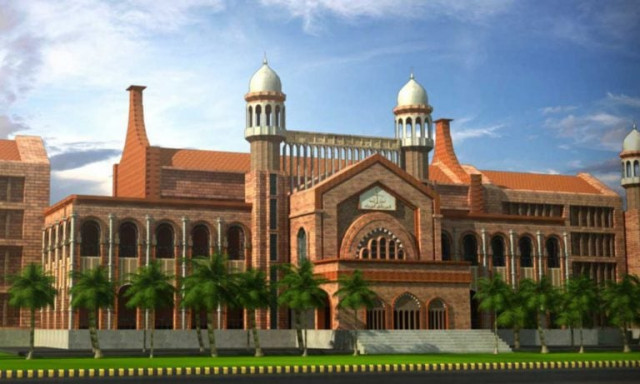
“Leader of the Opposition in the Punjab Assembly Moeenuddin Riaz Qureshi on Thursday approached the Lahore High Court against therecent amendmentsin an anti-terrorism law through which terrorism cases …”
It is pertinent to mention that the amendments were approved by the Punjab Assembly a few weeks back despite strong objections, protests and a walkout by opposition legislators. Through the newly inserted Section 21AAA into the Anti-Terrorism Act, 1997, a special security case mechanism was created for cases in which participants are considered to require extraordinary protection.
Qureshi criticised the provision and argued that it was unconstitutional. The plea contended that Section 21AAA conflicted with the existing, near-identical Section 21AA of the Act, which vested protective powers in courts rather than the executive.
Section 21AAA was, therefore, void under Article 143 of the Constitution, it said.
"Stay connected with Aman-e-Pakistan for ongoing live reporting and verified investigative updates."
The petition further implored that the provision violated the right to open justice and fair trial under Articles 9, 10-A and 14 of the Constitution, equality before law under Article 25, and separation of powers under Article 175(3), by shifting control over trial procedure from judges to an anonymous executive official.
It also questioned the excessive delegation of legislative power, arguing that the law provided no objective criteria for when a case qualified to be tried under the special regime.
The petitioner further urged the court to declare section 21AAA ultra vires the Constitution and to suspend its operation, including restraining the authorities from classifying any case as a “special security case” during the pendency of the petition.
Under Section 21AAA, a designated authority — an officer of at least BS-20 whose identity would itself remain confidential — can declare a case or a class of cases a special security case. At the authority’s request, the LHC chief justice can then assign the case to an anti-terrorism court’s judge.
Once a case is classified as a special security case, the identities of the judge, prosecutors, police officers, witnesses and the defence counsel involved in the proceedings are to remain undisclosed. For such cases, judicial orders carry official titles instead of the judges’ names, while witnesses are identified through codes issued by the designated authority.
The trial record is kept sealed and trials could be held at secure premises or conducted through video links, including from prisons.
Continue Reading: More in National
Swipe or click arrows to explore National desk coverage
 National
‘Aircraft belongs to CM's office, not me personally,’ Maryam hits back at criticism over use of official plane


 National