Durefishan opens up about love, heartbreak, healing and Pakistani TV
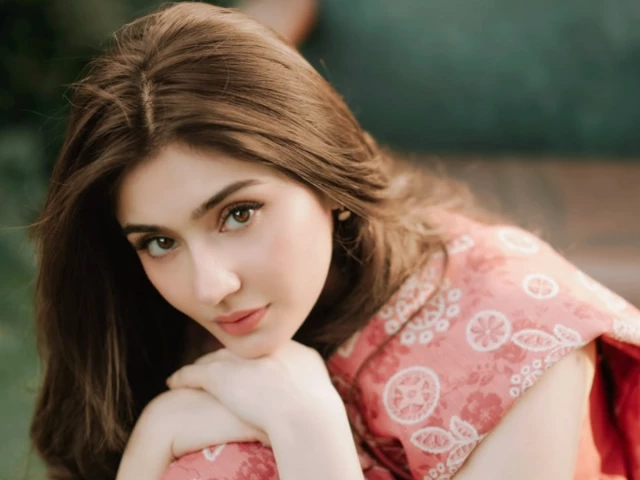
“Actor Durefishan Saleem has opened up about the emotional complexities behind her character Zaryab in the popular drama. Dar-e-Nijaat, addressing the criticism surrounding her decisions, the audience's …”
In an interview with. Khaleej Times, she discussed the emotional uncertainty that shapes Zaryab's journey, explaining why portraying a character does not necessarily mean endorsing every decision she makes. The actor said she was particularly drawn to the human reality of how heartbreak can affect a woman's sense of identity and self-worth.
"With Zaryab, I was interested in the very human reality of what happens when a woman is shattered by someone she loves. She may begin to blame herself, lose sight of her own worth or struggle to recognise the person she has become.
That doesn't mean the story is endorsing her suffering; it may simply be trying to understand it," she added. Durefishan said that an actor's responsibility was to portray a character honestly rather than dictate how audiences should perceive her.
"Stay connected with Aman-e-Pakistan for ongoing live reporting and verified investigative updates."
"I don't think an actor's job is to tell the audience what to think. It's to bring a character to life honestly enough that people feel compelled to think about her for themselves," she added.
The conversations surrounding. Dar-e-Nijaathave extended beyond the drama itself, with viewers debating Zaryab's decisions and the nature of her relationship with Abu Bakr., the audience's engagement reflects something deeper than an interest in fictional characters.
"People aren't just watching Zaryab and Abu Bakr; they're negotiating their own beliefs about love, pain, healing and what people deserve from one another," she said. She also defended Abu Bakr's portrayal, particularly the kindness and emotional maturity that have led some viewers to question whether such a character is realistic.
"He represents a kind of gentleness that audiences don't always get to see. People may find him too good to be true, but I don't think kindness, patience and emotional maturity should be considered unrealistic," she added.
Reflecting on relationships and the expectations placed on independent women, Durefishan said love should be about companionship rather than finding someone to complete an already fulfilled life. "When a woman is independent and has built a life for herself, she isn't necessarily looking for someone to complete her.
She's looking for someone with whom she can share the life she's already built. "She also highlighted the emotional expectations placed on women who are perceived as strong and self-sufficient, pointing out that independence does not eliminate the need for affection and reassurance.
"Perhaps the hardest thing to ask for is the freedom to be vulnerable. When you're perceived as strong, successful or capable, people sometimes forget that you, too, need reassurance, tenderness and a safe space to fall apart," she said.
For Durefishan, a healthy relationship is one in which kindness is not conditional on how much a person can endure. "The most beautiful kind of love is one where you don't have to earn gentleness by being strong all the time," she continued.
Discussing Zaryab's willingness to compromise in relationships, the actor drew a distinction between understanding a partner and sacrificing one's identity to retain a relationship. "The question is whether that compromise comes from a place of understanding or from a fear of losing someone," she said, adding, "There's a difference between adjusting your expectations and abandoning your values.
"Durefishan also suggested that repeatedly suppressing one's feelings or questioning one's worth to keep a relationship alive should prompt serious reflection. "When you repeatedly silence yourself or question your worth or become someone you don't recognise just to keep a relationship alive, I think it's worth asking what you're really holding on to," she said.
She further explained that love should encourage personal development rather than demand the disappearance of one's individuality. "Love should allow you to evolve, not require you to disappear. You should be able to look at yourself in the mirror and still recognise the person looking back.
"The actor also challenged the commonly held idea that healing requires completely forgetting someone who has played an important role in one's life. "We use the phrase moving on as though healing means reaching a point where someone no longer matters to us.
I'm not sure that's always true. Sometimes a person changes you and that experience becomes part of your story, even when the person is no longer part of your life," she said. She described letting go as reclaiming control over one's life rather than erasing the memories associated with a relationship.
"Letting go is less about forgetting someone and more about no longer allowing the experience to define you. Perhaps healing is learning to look back without wanting to return," she added. Away from the conversations surrounding Zaryab, Durefishan also discussed her professional ambitions and the future of Pakistan's entertainment industry.
While acknowledging the extensive reach of television and its loyal audience, she said the industry still had considerable room to grow in terms of storytelling and production structures.
"Television in Pakistan has given us an incredible reach and a very loyal audience, but the opportunities to experiment with different genres, complex characters and alternative storytelling formats are still developing," she said. She also expressed frustration with the influence television channels have over creative decisions and the limited space available to independent producers.
"Channels own everything, and the death of independent producers and the dictation by channels is frustrating as an actor for me," she added. Although she hopes to explore cinema and streaming platforms, Durefishan clarified that changing formats was not an ambition in itself.
"It's not simply to work in cinema or OTT for the sake of it. It's to find stories that demand something new from me," she said. Through Zaryab, Durefishan appears interested in exploring a difficult but familiar emotional reality: how heartbreak can affect a person's sense of identity and how the process of healing involves rediscovering oneself.
Rather than offering audiences a straightforward judgment of her character's decisions, the actor believes the story should encourage viewers to examine the emotions and circumstances behind them.
Written by Sheheryar Munawar
Aman-e-Pakistan Senior Journalist & Bureau Reporter
Continue Reading: More in Business
Swipe or click arrows to explore Business desk coverage