Agricultural tax failure is political, not policy
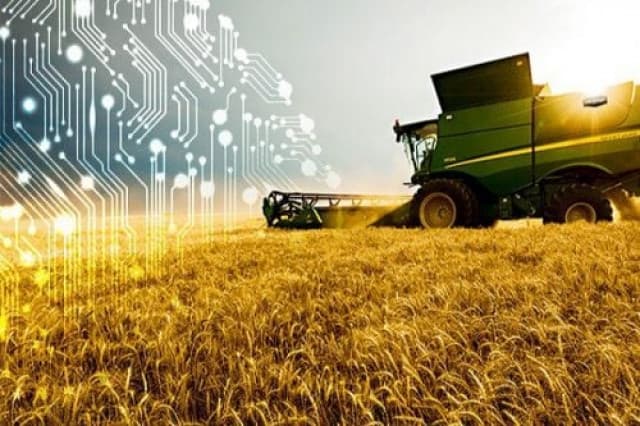
“In the FY2026-27 budget, the government has set an ambitious tax revenue target of Rs15.264 trillion, alongside a non-tax revenue target of Rs5.336 trillion. After the 18th Amendment, agriculture is de…”
After the 18th Amendment, agriculture is devolved to the provinces. However, the federal government continues to maintain the Ministry of National Food Security and Research. Its record has been far from reassuring.
Pakistan has repeatedly faced crises in staple commodities such as wheat and sugar, agricultural research has stagnated, food import dependence has increased, and the country is steadily shifting away from indigenous heirloom seeds towards reliance on imported seed varieties.
This is alarming for national food security if other international sea chokepoints, particularly the Strait of Malacca, disrupt supplies after the Strait of Hormuz. Pakistan's agricultural income tax regime was hailed as a landmark reform to broaden the tax base, promote tax justice and fulfil commitments under the International Monetary Fund (IMF) programme.
"Stay connected with Aman-e-Pakistan for ongoing live reporting and verified investigative updates."
Yet its first year has exposed a familiar reality: Pakistan's tax problem is not a shortage of laws but a chronic failure of enforcement against the ruling elites and powerful well-connected interests. During FY2025-26, nearly 445,000 taxpayers declared Rs306 billion in agricultural income.
However, provincial governments collected only Rs5.62 billion in agricultural income tax – barely 2% of the declared income. Punjab alone accounted for around 396,000 taxpayers declaring Rs293 billion, underlining the enormous untapped revenue potential. These figures expose a fundamental weakness in Pakistan's tax system.
The country continues to squeeze salaried employees, documented businesses and existing taxpayers while large segments of wealth and income remain outside the effective tax net. True tax reform is not about imposing more taxes on those already paying; it is about ensuring every sector contributes.
Politics, not policy. Agriculture contributes substantially to Pakistan's economy, yet effective taxation remains elusive because the challenge is political as much as administrative. Large landowners continue to wield significant influence in provincial assemblies, parliament and the Senate.
Many absentee landlords lease out their land while continuing to benefit from government incentives intended for genuine growers. This political economy explains why successive governments have announced reforms but struggled to implement them. Passing legislation is relatively easy; collecting taxes from influential constituencies is the real test of political will.
Protect small farmers, tax commercial agriculture. The debate has wrongly been framed as agriculture versus farmers. It is neither fair nor economically sensible to burden small cultivators already struggling with rising input costs, water shortages and climate shocks.
Agricultural holdings of up to 20 acres should remain exempt from agricultural income tax. This would protect the overwhelming majority of small farmers while allowing tax authorities to concentrate on medium and large landholders, commercial farms, absentee landlords and corporate agriculture where the real revenue potential exists.
Pakistan needs tax justice, not blanket taxation. Digital enforcement instead of paper compliance. The disappointing first-year performance reflects fragmented provincial implementation, weak enforcement and outdated tax administration.
Provincial governments should fully integrate digitised landholders' records with agricultural taxation. Ownership records, irrigation water usage footprints, databases, crop reports, procurement records, banking data and satellite imagery can all be cross-checked to identify discrepancies between the declared income and actual agricultural production.
Risk-based audits should replace indiscriminate inspections, focusing only on taxpayers whose declared income is inconsistent with their landholding size or crop output. Collect tax at the first point of sale. Instead of relying entirely on the Patwari system and voluntary declarations, provincial governments should strengthen compliance through adjustable withholding tax at the first point of sale.
Cotton ginning factories, sugar mills, rice shellers, modern rice mills, tobacco companies, grain procurement agencies, fruit and vegetable arrivals in mandis, exporters, feed manufacturers and other major buyers should deduct a modest adjustable withholding tax against future agricultural income tax liabilities. Such a system would significantly reduce evasion while simplifying tax collection without increasing rates.
Visible benefits build compliance. Tax compliance improves when taxpayers see where their money is spent. A fixed share of agricultural income tax collected in each district should remain there to finance rural roads, waterways, irrigation infrastructure, schools, healthcare facilities, agricultural research and extension services.
Farmers are far more willing to pay taxes when they witness direct improvements in their own communities rather than lavish spending on provincial chief ministers. Recognition also matters. Every district should publish an annual roll of honour recognising the highest compliant agricultural taxpayers, awarding medals through chief ministers, ministers and commissioners.
Public acknowledgement reinforces the principle that paying taxes is responsible citizenship rather than a penalty. Unified taxation means fairness. Pakistan's fragmented tax system has created deep inequities.
The country's documented sectors continue to shoulder a disproportionate burden while politically influential groups remain lightly taxed. Unified taxation and tax justice are far more important for widening the tax base than repeatedly squeezing already compliant sectors, exporters and the salaried class.
Income tax reform must focus on ending unjustified exemptions, strengthening enforcement and bringing the "big fish" into the tax net. Agriculture cannot remain an exception indefinitely if Pakistan hopes to restore fiscal sustainability. The real reform.
The first year of the unified agricultural income tax regime has shown that Pakistan's challenge is not designing tax policy but enforcing it fairly. A system that protects small farmers, targets large landholdings, leverages digital technology, collects taxes efficiently through market transactions, and ensures visible local benefits offers a practical path forward.
The government must now answer a difficult question: will it continue taxing those who are the easiest to tax, or will it finally demonstrate the political courage to tax those with the greatest capacity to pay? The credibility of Pakistan's tax reforms – and the promise of genuine tax justice – depends on that answer.
THE WRITER IS A FORMER VICE PRESIDENT OF KCCI, FORMER BOARD MEMBER OF REAP AND AN INTERNATIONAL TRADE EXPERT
Written by Saba Qamar
Aman-e-Pakistan Senior Journalist & Bureau Reporter
Continue Reading: More in Business
Swipe or click arrows to explore Business desk coverage