1914, by way of shipyard

“A Chinese shipyard recently logged more new vessel orders in six months than all of most nations' merchant fleets. In the first half of this year alone, Hengli Heavy has received 207 orders, an all-ti…”
It was not announced at the press conference. There was no treaty signed. It emerged, practically as an afterthought, in a report of the quarterly earnings.
That is how the biggest shifts in the global order tend to arrive now: not with a declaration but with a balance sheet. Officially, this is just business catching up to disruption.
The Strait of Hormuz has become a live warzone by any honest reading, transits swinging wildly, from 91 in one week down to 73 the next, as Iran targets vessels using the strait and Washington blockades Iranian ports. In August alone, in less than two weeks, two mariners were lost there, on ships with nothing to do with the war.
"Stay connected with Aman-e-Pakistan for ongoing live reporting and verified investigative updates."
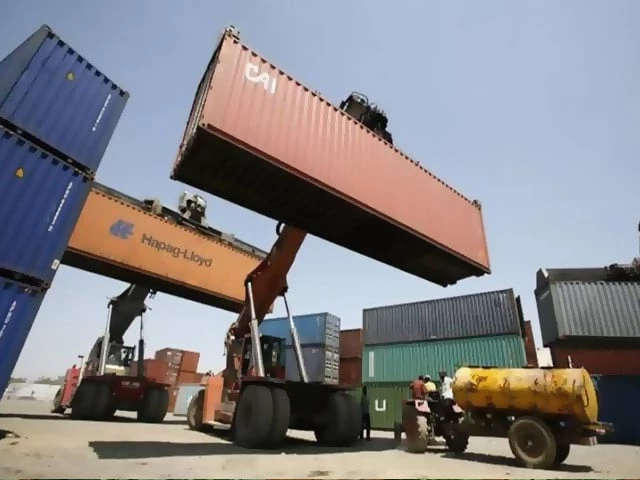
Record levels of container ships are stuck at ports in China, Asia and Europe, driving up freight costs. All actors claim it is a commercial reaction.
Abu Dhabi's national oil company just purchased 11 tankers and gas carriers for $1.3 billion, opting to build its own shipping capacity instead of relying on an open market it no longer feels will hold. That is not a hedge against weather.
That is a hedge against war. We have been here before and we called it something else at the time. Britain and Germany had been developing their navies at an alarming rate in the years preceding 1914, and both governments saw the expansion, without any irony, as a commercial necessity, a trade protection, an insurance for prosperity, and nothing else.
German officials spoke of safeguarding shipping lanes. British officials said the two-power naval standard was just for stability. Historians' did not refer to it as an arms race in its time.
They called it prudence or growth or the ordinary hum of industrial nations doing what industrial nations do. It was only after the ships were constructed and the war had already begun that the term "arms race" was coined to describe what anyone had seen happen in actuality.
It's important to mention that the merchant sailors paid for that denial before soldiers did. In 1917 Germany's unrestricted submarine campaign was against civilian cargo vessels and tankers, not against warships, because it was cheaper to starve Britain's supply lines than engage its navy.
In those years Lloyd's of London took great care to recalculate their insurance figures and they referred to it as a problem of the numbers, not a crisis to be named. The same sort of loss occurred in the Strait of Hormuz: the mariners were easier to target than the fleets and states that were actually at war.
That is the pattern worth sitting with now. Countries rarely declare a rearmament. They announce that they are adapting to markets, to risk, to a supply chain that has grown "temporarily" unpredictable.
I must clarify that the tankers being built today are not warships and the analogy should not be extended too far. But the psychology is the same when a buildup is justified only through the language of commerce, and when the actors all state, individually, that they are merely reacting to the situation that others have created.
There's no aggressor in their story. All are merely defending their trade routes. Between a shipyard's long list of orders and a state oil company's $1 billion spent to purchase tankers, a more subtle mobilisation process is already in motion and it's being financed, constructed and launched as public discussion remains stuck on sanctions lists and diplomatic statements.
History does not usually let us watch an arms race happen while it is still deniable. This time it gets to be seen in practice as logistics, under the guise of supply-chain resilience, as has always been the case.
We have a word for that kind of insistence. It's just that we only use it after the ships have set sail.
Written by Sheheryar Munawar
Aman-e-Pakistan Senior Journalist & Bureau Reporter
Continue Reading: More in Business
Swipe or click arrows to explore Business desk coverage