Like SpaceX, Anthropic ran an unusual IPO process, chafing some bankers
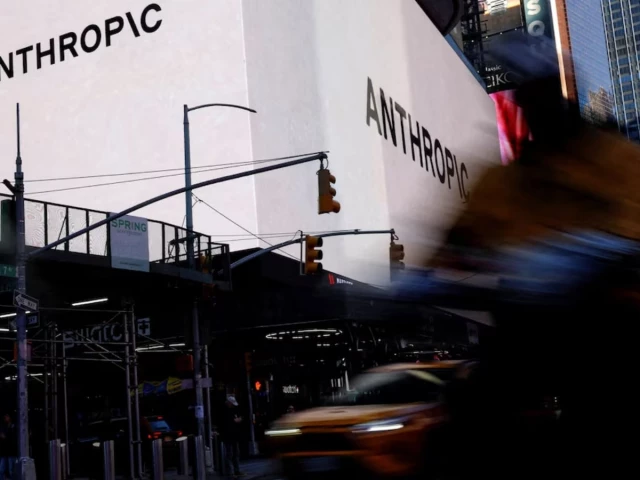
“For the second time this year, Wall Street bankers and lawyers took home a massive paycheck from a record-setting initial public offering. And for the second time this year, some of them came out of i…”
And for the second time this year, some of them came out of it complaining in private about how the process was riddled with complications and unlike any they had worked on before.
With SpaceX’s IPO in June, in which banks earned half a billion dollars in fees, bankers chafed over how tightly the Elon Musk-led company controlled the months-long process and kept financial and other information private, making it hard for advisers to do their jobs. As.
Anthropic’s ANT.O IPO, dubbed internally “Project Lantern”, eclipsed SpaceX on Thursday and bankers took home more thanhalf a billion dollarsin fees, several people close to the process listed a litany of problems that had plagued the offering process: a compressed timeline, marred by last-minute changes and delays in sharing financial projections; rushed document approvals; and highly unusual restrictions on bankers and concern about leaks — especially after Reuters reported many details from a draft IPO filing weeks before it was made public.
"Stay connected with Aman-e-Pakistan for ongoing live reporting and verified investigative updates."
Anthropic, for example, instructed some of its 22 IPO underwriters to limit the number of bankers working on the deal to four, asking the firms to make sure they were senior staff, several people familiar with the matter said.
One of the people said the restriction likely came out of fear that information would leak, and that the banks found a way to work around it anyway. Underlying these complaints is a new power dynamic between technology companies and Wall Street.
Companies such as SpaceX, Anthropic — and potentially also OpenAI in the future — have come to wield enormous power as the transformative potential of artificial intelligence creates a frenzied demand for their shares, and they are wielding it to do things their way. That is upsetting some bankers.
But banks and investors appear to have little choice but to play along. “These companies certainly did have some market power to tell underwriters that it’s not going to be business as usual,” said Jay Ritter, a University of Florida professor emeritus who researches IPOs.
“But the big Wall Street firms, I suspect, are still going to be doing things as business as usual for all but maybe OpenAI (after these two deals).”Read More:EU proposes tax on Big Tech to boost budget. Ritter added that both SpaceX and Anthropic had negotiated to pay underwriters nothing on the additional shares sold through the greenshoe option.
“I don't think most companies are going to be able to demand zero spread on overallotment shares,” he said. Anthropic, Goldman Sachs and Morgan Stanley, the two lead underwriters on the two IPOs, declined to comment.
SpaceX and OpenAI did not respond to requests for comment. Both SpaceX and Anthropic debuted successfully, raising record amounts of money, and their shares rallied initially. A key part of the underwriters’ job is to market the securities.
Thanks to the demand for AI, that was an easy sell — both companies had order books oversubscribed many times over. After an initial burst in shares, the trajectories of the two big AI firms diverged.
SpaceX climbed to a post-listing peak of $201.80 on June 16 before retreating below its $135 IPO price for the first time in mid-July. Anthropic’s shares closed down 8.5% on Friday after a 17% first-day pop, as a dramatic unraveling of the AI trade showed that even a blockbuster listing could not shake the gloom hanging over the sector.
Unusual Non-competes and restriction. In the case of SpaceX’s IPO, the people close to the process said Musk’s team dictated terms at every stage. Musk's team powerful US banks — including Goldman Sachs and Morgan Stanley — how to market SpaceX's stock and to whom.
It order sizes they needed to “fill” — in some cases a few billion dollars — and gave them instructions on what types of investors to bring. Banks signed on to underwrite the IPO without being paid, the people said.
The underlying current running through Anthropic’s IPO process was what several of the people who spoke to Reuters interpreted as a sense of extreme caution. Anthropic asked some senior officers at banks working on its IPO to sign legal documents restricting core members of the transaction team from working with rival companies, including OpenAI, Cursor, Deep.
Seek and Hugging Face, for six months after it went public,. Banks routinely manage conflicts and protect client confidentiality. But bankers and lawyers said it is rare for an IPO to impose exclusivity this broad, particularly on individual bankers.
In previous head-to-head IPOs such as those of ridesharing rivals Uber(UBER.N), opens new taband Lyft(LYFT.O), opens new tab, or real estate companies Trulia and Zillow(ZG.O), opens new tab, banks could simply pick a side, in part because the deals were smaller and required fewer banks.
Anthropic, by contrast, needed a broad syndicate to raise the enormous amount of capital it was seeking. That, some of the people said, explained why Anthropic sought to bind individual bankers with these restrictions.
One banker who declined to sign on to the agreement said it was a challenge to find people who could promise not to actively cover or engage with Anthropic’s peers, especially as several of those companies pursue their own initial or secondary offerings. Information leaks and late nights.
Some of the restrictions were meant to control leaks of information. Nearly four weeks before Anthropic’s filing with the Securities and Exchange Commission, called Form S-1, was made public, Reuters reported on it, revealing details of the company’s financials, risk factors, dealings with other tech companies and other information.
Anthropic also used a product called Net. Roadshow to share information, instead of regular PDFs, with most of the banks underwriting the deal. Net.
Roadshow logs access details, including information such as who has seen the document and looked at which page. Documents on Net. Roadshow also had individual bankers’ names as watermarks.
Leaks continued to surface in the press, but using Net. Roadshow complicated bankers' work, including because the platform would not let them save copies of documents, one of the people said. Anthropic planned to file an updated securities filing, called an S-1A, with the SEC with the price range and to launch the marketing on November 10.
To do so, it needed to send a draft to all the banks in its syndicate for them to sign off on it. The night before it was to happen, a law firm on the deal sent a PDF to the banks about the sale of shares in Canada.
But soon it followed withanother emailasking them to disregard it, saying it “contains incorrect price range and share information,”, which was seen by Reuters. The correct S-1A was then sent via the Net. Roadshow platform around 2 a.m. New York time.
Banks were to sign off on it before it was filed with the SEC.
Continue Reading: More in Business
Swipe or click arrows to explore Business desk coverage