US dollar weakens as rate hike expectations fade amid Middle East instability
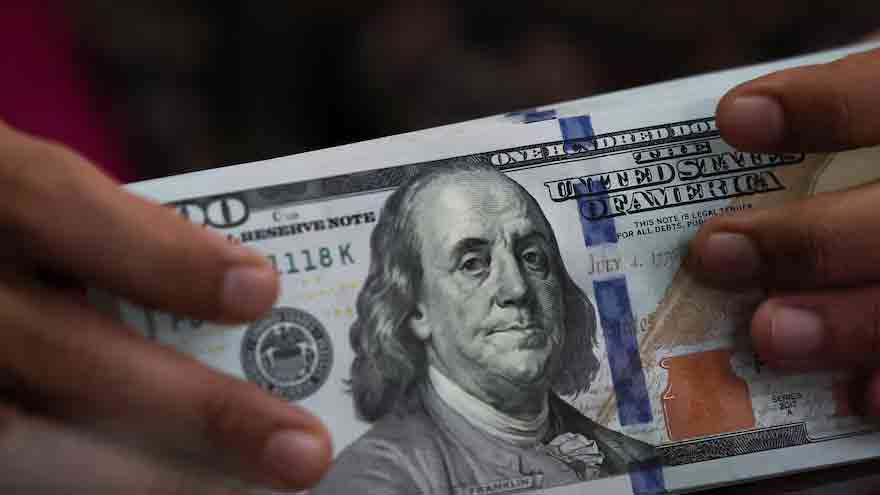
“The United States dollar is currently trading near multi-month lows against a basket of major global currencies as investors significantly recalibrate their expectations regarding the Federal Reserve'…”
Recent economic indicators from the United States, including a notable decline in retail sales for July—the first such drop in nine months—alongside unexpected job losses and cooling inflation metrics, have prompted market participants to move away from the anticipation of near-term interest rate hikes. According to the CME Fed.
Watch tool, the probability of a rate increase at the Federal Reserve's September meeting has plummeted to 35 percent, a sharp decline from the 52.2 percent likelihood projected just one week ago.
This shift in sentiment reflects a broader market consensus that the American economy may be losing momentum, thereby reducing the immediate pressure on the central bank to tighten financial conditions further. Despite this, the global financial landscape remains fraught with uncertainty as geopolitical tensions in the Middle East continue to escalate, casting a long shadow over market stability.
"Stay connected with Aman-e-Pakistan for ongoing live reporting and verified investigative updates."
The ongoing conflict between the United States and Iran has reached a critical juncture, with Iranian officials announcing a transition to a fully offensive military posture following the collapse of ceasefire negotiations. Washington has simultaneously ruled out any extension of the June ceasefire agreement, leaving the Strait of Hormuz effectively closed and fueling concerns over global supply chain disruptions.
The resulting volatility has pushed Brent crude futures up by 0.3 percent to $91.14 per barrel, reaching levels not seen since late July. This energy price surge is exacerbating fears of persistent inflation, which analysts warn leaves little room for error in a global economy prone to supply shocks.
Nohshad Shah, head of EMEA fixed income sales at Citadel Securities, noted that while a two percent annual inflation pace might be tolerated by the Federal Reserve, the current environment offers no breathing room for the inflation process.
Consequently, bond markets are experiencing significant turbulence, with yields rising globally as investors demand higher premiums to compensate for the risks associated with elevated oil prices and fiscal instability.
The yield on the 30-year U.S. Treasury bond is currently hovering near its highest level in nearly two decades, while the 10-year Japanese Government Bond yield has climbed to its highest point since September 1996. Market participants are increasingly scrutinizing U.S. Treasury auctions, reflecting deep-seated concerns regarding the nation's growing debt burden and perceived lack of fiscal discipline.
Anthony Saglimbene, chief market strategist at Ameriprise Financial, observed that frequent, large-scale treasury auctions serve as a mechanism for the bond market to push back against the government's eroding fiscal trajectory by demanding higher yields.
Meanwhile, the Japanese yen remains under pressure, trading just below the 160 level against the dollar, as markets look toward the Bank of Japan's upcoming meeting.
Sources indicate that the central bank is prepared to raise interest rates and is considering more aggressive future hikes to stabilize the currency, which has struggled to maintain gains following joint intervention efforts in late July.
Amidst this complex backdrop, the euro and sterling have maintained their positions near multi-month highs, trading at $1.1581 and $1.3548 respectively, while the Australian and New Zealand dollars have also shown resilience.
As the global financial community navigates these competing pressures of cooling U.S. economic data and heightened geopolitical risk, the prevailing sentiment remains one of extreme caution, with investors closely monitoring both central bank rhetoric and the evolving security situation in the Middle East for further signals on the direction of global capital flows.
Written by Sajal Ali
Aman-e-Pakistan Senior Journalist & Bureau Reporter
Continue Reading: More in Business
Swipe or click arrows to explore Business desk coverage